Blog

  • Hot Topics in Education… Do You Agree?

    Hot Topics in Education… Do You Agree?

    I had a chat with K12 Co-author today, as my goal was to create a publishing calendar for K12Leaders in the coming months. I was lacking inspiration coming up with a cohesive list on my own, so I turned to our AI tool to help steer me in a creative direction.

    I want our publishing calendar to stand out from other social-media platforms and educational sites. I started by asking K12 Co-author for a list of the current top 10 topics in K-12 education because my list seemed overdone, riddled with jargon and too generic. I hoped AI could breathe some life into my mundane list.

    So, thanks to K12 Co-author, here we are… “Topics in K-12 education can vary based on trends, educational policies, societal changes, and technological advancements. Here’s a list of potential top topics in K-12 education:”

    1. Personalized Learning: Tailoring education to individual student needs and learning styles.
    2. EdTech Integration: Incorporating educational technology tools and platforms into the classroom.
    3. Project-Based Learning: Learning through hands-on projects and real-world applications.
    4. Social and Emotional Learning (SEL): Fostering emotional intelligence, self-awareness, and interpersonal skills.
    5. STEM Education: Emphasizing Science, Technology, Engineering, and Mathematics.
    6. Digital Literacy and Critical Thinking: Teaching students to critically navigate and understand digital information.
    7. Inclusive Education: Promoting inclusive classrooms that celebrate diversity, accommodate all students, and emphasize positive teacher-student relationships.
    8. Teacher Professional Development: Providing ongoing training and support for educators.
    9. Assessment Innovation: Exploring alternative assessment methods beyond traditional testing to assess student learning.
    10. Global Awareness and Civic Education: Developing students’ understanding of global issues and cultures while educating them about democracy, citizenship, and social responsibility

    Honestly? I felt my Co-author wasn’t much more inspired than me.  Turn the page of any magazine, and these are the topics that everyone is talking about. I couldn’t help but wonder how long we are going to talk about them, and more importantly, when would we start talking about something NEW??

    So, my chat with Co-author continued…  so I asked….

    “Predicting the exact state of education in 2030 is challenging, but based on trends and potential developments, can you provide a list representing potential Top-10 topics in K-12 education by 2030?”

    Co-author gave me this caveat as a warning of sorts… “Remember, these predictions are speculative and based on current trends and potential developments. The actual landscape of education in 2030 might involve unforeseen shifts and advancements. To stay updated, it’s advisable to follow educational research, technological innovations, and evolving pedagogical approaches.”

    Heard.

    1. Personalized AI Learning: Advanced AI-driven systems for tailored learning experiences.
    2. Immersive Technologies: Virtual and augmented reality transforming learning interactions.
    3. Global Competency: Preparing students for a globally connected world with cultural understanding.
    4. Data Literacy and Ethical Tech Use: Teaching data literacy and responsible tech use.
    5. Comprehensive Environmental Education: Climate, sustainability, and environmental stewardship education.
    6. Holistic Health Education: Integrating physical, mental, and emotional health in the curriculum.
    7. Critical Thinking and Innovation: Developing problem-solving skills and fostering innovation.
    8. Interdisciplinary Learning: Breaking subject silos for holistic knowledge acquisition.
    9. Robotics and Automation Education: Preparing students for an automated future.
    10. Equity and Inclusion: Ensuring equitable and inclusive education for all students.

    What do you think? I guess I was expecting something more “futuristic”, but in all actuality, 2030 is only 6 years away .  With that frame of reference, this list makes more sense… Is there enough to start sinking our teeth into now? How can we can better prepare for what’s “NEXT” in education?

    What topics would you like to see K12Leaders focus on in the coming year?  Feel free to comment below!

    Start using K12 Co-Author today by clicking here. We are ALWAYS looking to include the voice of educators here on K12Leaders.

  • Second Call for Participants!

    Second Call for Participants!

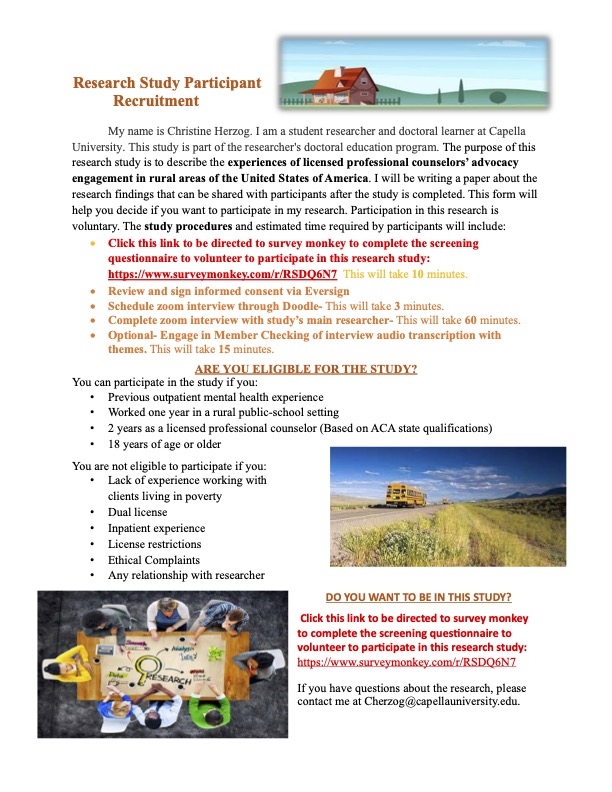
    From K12Leader Christine Herzog: A second call for research study participants: Seeking LPCs/ LPCCs with rural school experience interested in participating in a research study!

    Screening Survey: https://www.surveymonkey.com/r/RSDQ6N7

  • Join me for my AMA session on October 5th!

    Join me for my AMA session on October 5th!

    You have questions? I might have answers! Last month we debuted this monthly AMA (Ask Me Anything) session that was lively and spirited as you the guest ask me the host to answer any question. While most of the questions did center around education, there were some fun ones thrown in there as well.

    Questions about AI? I just wrote a book about it!

    Questions about how to write a book? I just finished my 8th!

    Questions about why do I always pose with my hand on my chin beard? Tune in tomorrow at 1pm EST to find out more.

    Just jump onto K12Leaders at 1pm EST tomorrow and you’ll see instructions on how to tune into my “channel” and ask me anything.

    “See” you soon!

    – Carl

  • K12Leaders: Protecting Educators’ Privacy and Amplifying Educators’ Voices

    K12Leaders: Protecting Educators’ Privacy and Amplifying Educators’ Voices

    K12Leaders is built by educators for educators, as a safe space for K12 teachers, staff, administrators and supporting partners to network and discuss the topics that strengthen education. We have 4 main goals:

    • To amplify educators voices and help them discover opportunities for growth
    • To provide a safe and contemporary suite of tools to connect our members
    • To “keep the conversation going” between point-in-time events like conferences or PD events
    • To build more authentic relationships between those dedicated to supporting K12 education

    Online privacy is a critical concern of educators. K12Leaders, our private social network, is designed with a strong respect for the safety and privacy of our community members. Let’s take a look at how you can control your network experience.

    Your Data, Your Control

    We take your data privacy seriously at K12Leaders. We encourage all our members to review our privacy policy, which outlines our commitment to respecting your data. Importantly, you have the ability to export your data at any time, ensuring that you retain control over your information.

    Fine-Tuning Your Privacy

    As a member of the K12Leaders community, you have the flexibility to customize your in-network privacy and notification settings.

    Closed Network

    K12Leaders is not open to everyone. We are here to support conversations and collaboration that strengthen education and empower dedicated educators to improve student outcomes. While we have moderation policies, strict terms-of-service, and guidelines for best practices, we also ensure our members are either currently working to support education, or have demonstrated their commitment over their professional career.

    Verified Checkmarks k12 leaders
    K12Verified will always be free for Educators

    We rely on “human intelligence,” not AI to do that. And one tool we encourage our members to take advantage of is our free “K12 Verified” badge program. We do not charge educators for validating their credentials. It is one part of our commitment to keeping K12Leaders available to those who rely so heavily on their peers and colleagues for support, motivation, and ongoing professional development.

    Email and Web Notifications

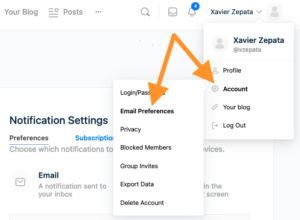
    As a member of the network, you have precise control over when and how you receive notifications related to network activity. Email notifications allow you to adjust the quantity and timing of email alerts. Web notifications cover pop-up notifications for mentions in posts or direct messages. Configuring these settings is simple—just navigate to your Account -> Email Notifications menu.

    email and web notification settings

    Privacy Settings

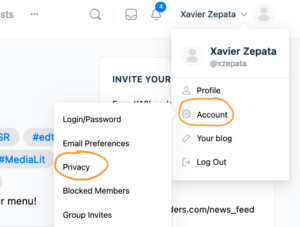
    Our privacy settings empower you to regulate your visibility within the Member Directory and search results. Access these options through the top-right menu under Account -> Privacy. You can configure your online presence according to your preferences, ensuring that you maintain control over your network footprint.

    Privacy settings

    Profile Field Visibility

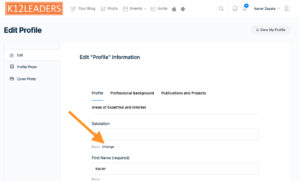
    Your profile is your network identity, and we believe you should decide what information is displayed. Managing your profile field visibility is easy:

    1. Visit your Profile.
    2. Select “Edit.”
    3. Adjust the visibility settings beneath each field you wish to control.
    profile field visibility

    K12Leaders is committed to providing educators with the tools they need to engage with each other safely and effectively. We understand that your privacy is important, and we’re here to help you protect it.

    For a step-by-step guide to configuring your settings, take a couple of minutes to watch our tutorial:

    Stay informed, engaged and secure with K12Leaders. Join our community and experience the benefits of safe online collaboration for educators. Or if you’re already here, feel free to invite your friends and colleagues to join the conversation!

  • Unleash Your Voice: Why Teachers Should Become Blog Authors

    Unleash Your Voice: Why Teachers Should Become Blog Authors

    In the ever-evolving landscape of education, it’s becoming increasingly important for educators to amplify their voices and share their insights with the world. Blogging has emerged as a powerful platform for teachers to do just that. However, we understand that educators are busy individuals, and time is often a precious commodity. That’s where innovative tools like K12 Co-author come into play, helping you jumpstart your creativity and maximize the impact of your writing. Let’s explore why teachers should become blog authors and how teacher authors like you can overcome the time constraint hurdle with the assistance of AI.

    1. Share Your Unique Perspective:

    Every teacher has a unique perspective on education shaped by their experiences, challenges, and successes in the classroom. By becoming a blog author, you have the opportunity to share these insights with a global audience. Your voice matters, and your ideas can inspire and influence fellow educators, administrators, parents, and even policymakers. Blogging allows you to contribute to important conversations in education and make a positive impact on the field.

    1. Reflect and Improve:

    Blogging is not just about sharing; it’s also a powerful tool for personal and professional growth. When you write about your teaching experiences, you’re forced to reflect on your methods, strategies, and outcomes. This self-reflection can lead to valuable insights and improvements in your teaching practices. It’s a win-win situation – you help others by sharing your experiences, and you help yourself by becoming a more effective educator.

    1. Connect and Collaborate:

    Blogging creates opportunities for networking and collaboration. When you publish your thoughts and ideas online, you open the door to connect with like-minded educators who share your passion for teaching and learning. These connections can lead to exciting collaborations, partnerships, and opportunities to learn from others. By joining the blogging community, you become part of a supportive and dynamic network of educators.

    1. Overcoming the Time Barrier with AI:

    We understand that teachers are incredibly busy, and finding time for blogging can be challenging. This is where AI-powered tools like K12 Co-author come to your rescue. K12 Co-author can assist you in several ways:

    * Generate Ideas: Stuck on what to write about? Co-Author can suggest relevant topics and brainstorm ideas to kickstart your writing process.

    * Speed Up Writing: AI can help you write more efficiently. It can assist in drafting articles, proofreading, and even generating engaging headlines and introductions.

    * Enhance Research: AI can help you gather information and data quickly, saving you precious research time.

    * Increase Productivity: With AI’s assistance, you can write more in less time, allowing you to focus on other important aspects of your teaching profession.

    Becoming a blog author is a powerful way for teachers to amplify their voices, share their experiences, and make a meaningful impact on education. Don’t let a busy schedule hinder your writing aspirations. Embrace AI tools like K12 Co-author to streamline your writing process and make the most of your limited time. Your insights and ideas have the potential to shape the future of education, so start blogging today and join the community of educators who are making a difference through their words. Your voice matters, and the world is waiting to hear your story.

    Start using K12 Co-Author today by clicking here. We are ALWAYS looking to include the voice of educators here on K12Leaders.

    #ContinueTheConversation!

  • Meaningful Growth: Building Your K12Leaders Network

    Meaningful Growth: Building Your K12Leaders Network

    Is it every week that social media tries to re-invent itself? For all the (valid) dissatisfaction we seem to have with the social networks we’ve relied on for the past several years, it’s clear that we are also (justifiably) suspicious of the “next new thing.” But, as we pointed out when we launched K12Leaders last year, there is an unmistakable need for change… especially for educators.

    K12Leaders has grown significantly over the last several months. We’ve had our awkward moments, but we know that what we’re doing -creating a safe online space for educators to grow in their practice- has a huge value to the educators, staff, administrators, and partners we serve.

    Perhaps more precisely, it’s actually <you> we see growing… the K12 community. And we are certain that as the online community on K12Leaders grows, so will the value we collectively draw from it.

    Here, we’ll take a look at three ways we make it easy to invite, engage, and grow your community of practice. Including one important way we never will! Your invitation is not merely a connection; it’s an opportunity to engage your friends and colleagues in a learning environment that’s committed to supporting their personal and professional growth. Oh… and, yes. You can become a K12Leaders Ambassador, a testament to your commitment to our ongoing learning, along the way 😉

    So, let’s delve into these methods, unlocking the potential of connecting, collaborating, and collectively advancing education through K12Leaders:

    Exploring Three Methods to Invite Friends and Colleagues to Join K12Leaders

    Here are 3 ways to connect and grow your network. And every invitation you send adds to your tally of K12Leaders Ambassador Points.

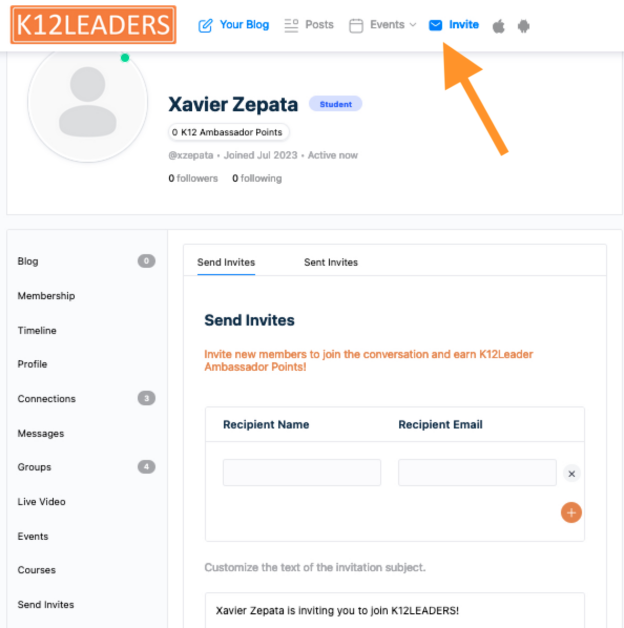
    Top Menu Invites

    Navigate to the top menu and select “Invite.” This simply lets you to enter the names and email addresses of the individuals you’d like to invite. Feel free to personalize both the subject and content of the invitation. It’s worth noting our dedicated mail server handles these invitations. That means there’s a chance the invitation might be flagged as spam. To ensure a successful connection, consider sending a follow-up message as well.

    Ad-hoc Sidebar Invite s

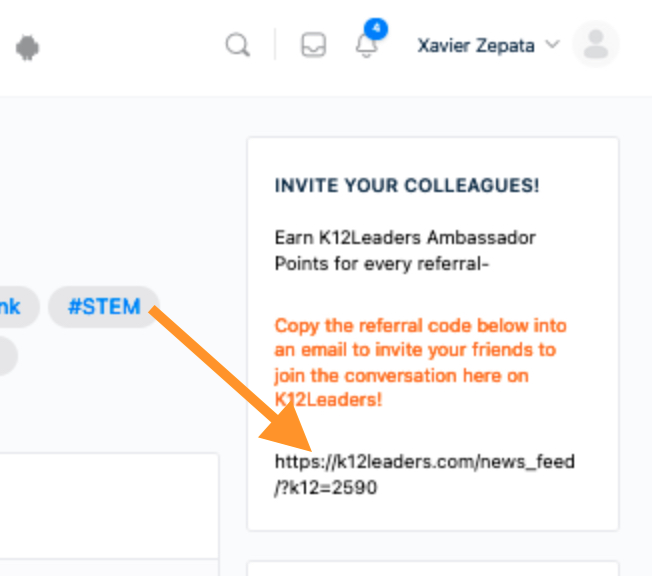
    While browsing pages like the News Feed and Member Directory, you’ll notice a sidebar with a unique URL you can easily copy and paste into your own email message. The embedded codes in this URL link the invitation directly to your account, guaranteeing you earn Ambassador Points for each invitation extended.

    Invitations to a Community

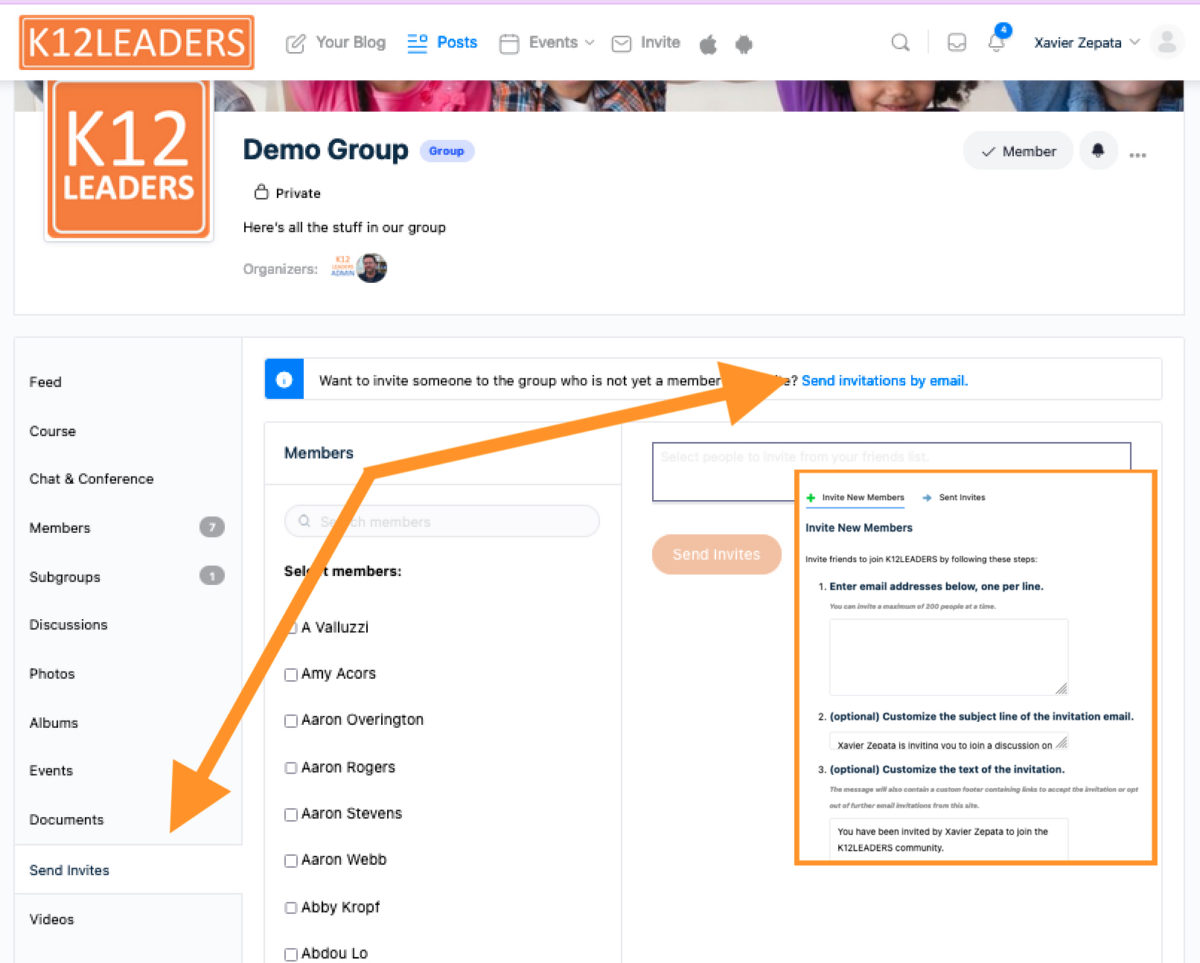
    To invite someone to join a specific community within the platform, the Community Organizer can activate the “Send Invite” menu. Upon selecting this menu, you’ll be presented with two options: inviting your K12Leaders friends from your internal network or opting for the “send invitations by email” choice. If you choose the email option, you can paste up to 200 email addresses and customize the invitation. Once your friends register, they will receive a notification, informing them of your invitation to join your group.

    And that really important one thing we’ll never do?

    Right… we didn’t forget. And this really is important.

    We’ll never suggest you “import your address book.” Ever.

    In our mind this is simultaneously one of the worst things we could ask of you, and one worst things we could do for this network.

    First, we see this option on other platforms as grossly devaluing their members. It betrays the fact that those platforms think numbers are more important than individuals. None of us chose a career in education to treat anyone “like a number.”

    Secondly, importing everyone would simply dilute the value of the network. K12Leaders isn’t for everyone; and that’s okay. We are here to serve those who serve education.

    Inviting friends and colleagues to join K12Leaders not only enriches your network but also contributes to the vibrant educational community we’re building together. Explore these three options to connect, collaborate, and earn Ambassador Points as you help K12Leaders grow!

  • We Need to Integrate 3D Interactive Content into our Curriculum today!

    We Need to Integrate 3D Interactive Content into our Curriculum today!

    A Gateway to the Future of Education

    In the swiftly advancing digital landscape, incorporating 3D interactive content into mainstream education represents a pivotal transformation and a requisite evolution. The academic syllabi must be metamorphosed to incorporate these technological advancements as we navigate a new educational epoch driven by AR, VR, and spatial computing advancements. Utilizing learning object repositories such as Safari Montage for effective content dissemination and integrating content from innovative providers like Phibonacci can be significant steps in this direction. Seeking XR and content guidance from experts at XR Terra can lay a solid foundation for this transition, nurturing a generation proficient and skilled in utilizing these platforms.

    Let’s Dive In

    Incorporating 3D interactive content into mainstream education heralds numerous benefits. It amplifies the learning experience by rendering complex concepts more tangible and understandable. Picture a biology student navigating the complex architecture of a cell in a 3D space or a history student immersing themselves in a vibrant simulation of an ancient civilization facilitated by resources from Safari Montage. Such immersive experiences can make learning more captivating and profound.

    This dynamic approach to learning fosters critical thinking and problem-solving capabilities. Students can hypothesize, alter, and validate their concepts in virtual settings, encouraging a hands-on and iterative learning method. It also facilitates visible thinking and fosters a deeper engagement and active participation.

    Prepping for a future significantly influenced by AR, VR, and spatial computing, weaving 3D interactive content into education assures students are acquainted with technologies that would predominantly shape their professional environments. This visionary approach nurtures a workforce that is not just tech-savvy but also capable of exploiting these technologies to the utmost extent, encouraging innovation and expansion in diverse fields.

    3D interactive educational settings are inclusive and accessible, allowing students with various learning styles and abilities to excel. Primarily, visual and kinesthetic learners stand to gain tremendously, having the opportunity to visualize and interact with the content that aligns with their learning preferences.

    To fully realize the potential of these technological advancements, a collaborative effort between educators and policymakers is imperative. Crafting progressive and adaptive curriculums, with training modules and integrated content facilitated through platforms like Phibonacci is essential. These empower teachers with the requisite skills and understanding to wield these tools efficaciously. This guarantees a fluid integration that amplifies the benefits of 3D interactive content in education, introducing students and educators to spatial and experiential concepts.

    In conclusion, the amalgamation of 3D interactive content with mainstream educational content transcends being a mere trend; it signifies a critical stride in readying the education sector for the unfolding developments in AR, VR, and spatial computing. By embracing these technologies, guided by insights from XR Terra, we can cultivate an immersive and captivating learning habitat, concurrently preparing students for a technologically advanced future. This fosters a generation adept at harnessing the expansive capabilities of these platforms. Now is the opportunity to advance, nurturing minds well-informed, flexible, and primed for the forthcoming challenges.

    Early drafts of this article were inspired by K12 Co-author.  Try it here.

  • Education is the role of parents, the state simply supports them

    Education is the role of parents, the state simply supports them

    We as educators must strive to create a supportive learning environment for the students and their families by providing them with the necessary resources and guidance to ensure their success. We must create a safe learning environment, where all members of the school community are respected and valued. We must welcome and encourage parental involvement in all aspects of their child’s education.

    We must also keep in mind that parents are the primary agents of socialization and moral formation for their children. Therefore, we must ensure that our educational strategies and curriculum are consistent with the values and beliefs of the families. We must also strive to help parents understand the importance of education and their role in their child’s success.

    Finally, we must be open to feedback and suggestions from parents, as their insights can help us to better meet the needs of the students. It is essential that we maintain open communication and dialogue with parents to foster a strong partnership in the education of their children.

  • Preparing Students to be Digitally Literate

    Preparing Students to be Digitally Literate

    Are the digital literacy efforts in your district as strong as you would like them to be?

    A survey conducted by Pew Research Center in 2022 found that 97% of teens use the internet daily, and 46% use it “almost constantly.” When online, teens can be exposed to thousands of media messages – some requiring extra effort to analyze and contextualize. With the continued technological advancements, even our youngest students have access to media messages.

    Do our students fully understand what they are seeing? Can they distinguish between real or altered AI-generated content? Now more than ever, digital literacy – the ability to use technology to locate, evaluate, interpret, and create – is a critical skill that needs attention if students are going to thrive in the classroom and beyond.

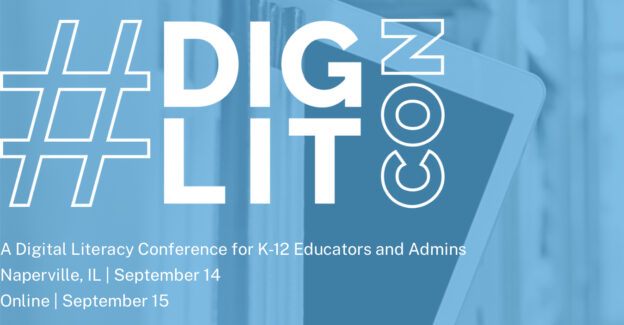
    The Learning Technology Center of Illinois (LTC) is helping prepare educators to confront these challenges through our 3rd annual Digital Literacy Conference. This year, #DigLitCon will be held September 14-15, 2023. The first day will consist of in-person workshops on important topics such as Media Literacy, The Power of Visual Note-Taking, and Artificial Intelligence in Education. Join other educators to learn what works for their students and make new connections. The second day will occur virtually and kick off with a keynote from media literacy expert and educator Julie Smith, followed by twenty breakout sessions. Attendees will receive access to recorded sessions for 30 days after the conference.

    Don’t miss the opportunity to participate in this unique and important event. Sign up to send your team today.

    Find the full schedule of sessions here: https://www.ltcillinois.org/diglitcon/ and register for one or both days here: https://ltcillinois.tfaforms.net/100?eid=a031Q00002JYjLtQAL

  • Reflecting on Thinking and Democracy in Greece 

    Reflecting on Thinking and Democracy in Greece 

    Our family was fortunate to visit Athens, Greece this summer, where you cannot help but reflect on Socrates, Plato, Aristotle, and thinking in general—even while sweating profusely. These great philosophers lived almost 2500 years ago. They had some similar and some different philosophies, but they were all deep thinkers who inspired others as teachers.

    Philosophy is the study of truths about the world and our place in it. Philosophers use reason, logic, and critical thinking to explore questions about the nature of reality, knowledge, morality, and beauty. The term comes from the Greek words “philo” (love) and “sophia” (wisdom), so a philosopher is literally a lover of wisdom. Philosophers seek to learn more about the world and understand the meaning of life. Do we philosophize enough these days? Why not?

    I also pondered the concept of democracy, which originates from the Greek words ‘demos’ meaning citizen and ‘kratos’ meaning power or rule. (My fellow movie lovers are no doubt thinking about Windex.) Athenians practiced one of the earliest examples of Western democracy during this time. (I use “Western” to avoid any false claims of exceptionalism, recognizing that other forms of democracy emerged independently, such as the Iroquois Confederacy, Mayan city-states, the timawa system of the Kalinga people, and the mbari system of the Kikuyu people.) What was the relationship between Athenian democracy and deep thinking?

    Fast-forward to today. Do we, as a society, value thinking more or less? Does it vary based on cultures and other attributes? Do religions and affiliations encourage profound contemplation or blind adherence to doctrine? Do we truly comprehend cognition and appreciate the value of thinking, or are we inclined to blame and delegate governance responsibilities to others?

    I believe that Homo sapiens’ capacity to think has increased, but what about our desire? What does it signify if we neglect cognition, the science of learning, and even philosophy in our schools? I hope that advancements in our understanding of cognition and learning will usher in another golden age of thoughtful inquiry, unhampered by AI. However, I also observe a growing trend of intellectual passivity in favor of information consumption, groupthink, and bias blindness. Perhaps we are simply overwhelmed by the information explosion and need time to adjust. One thing is certain: the promise of collective progress in thinking and decision-making hinges on an accelerated evolution of our educational systems.